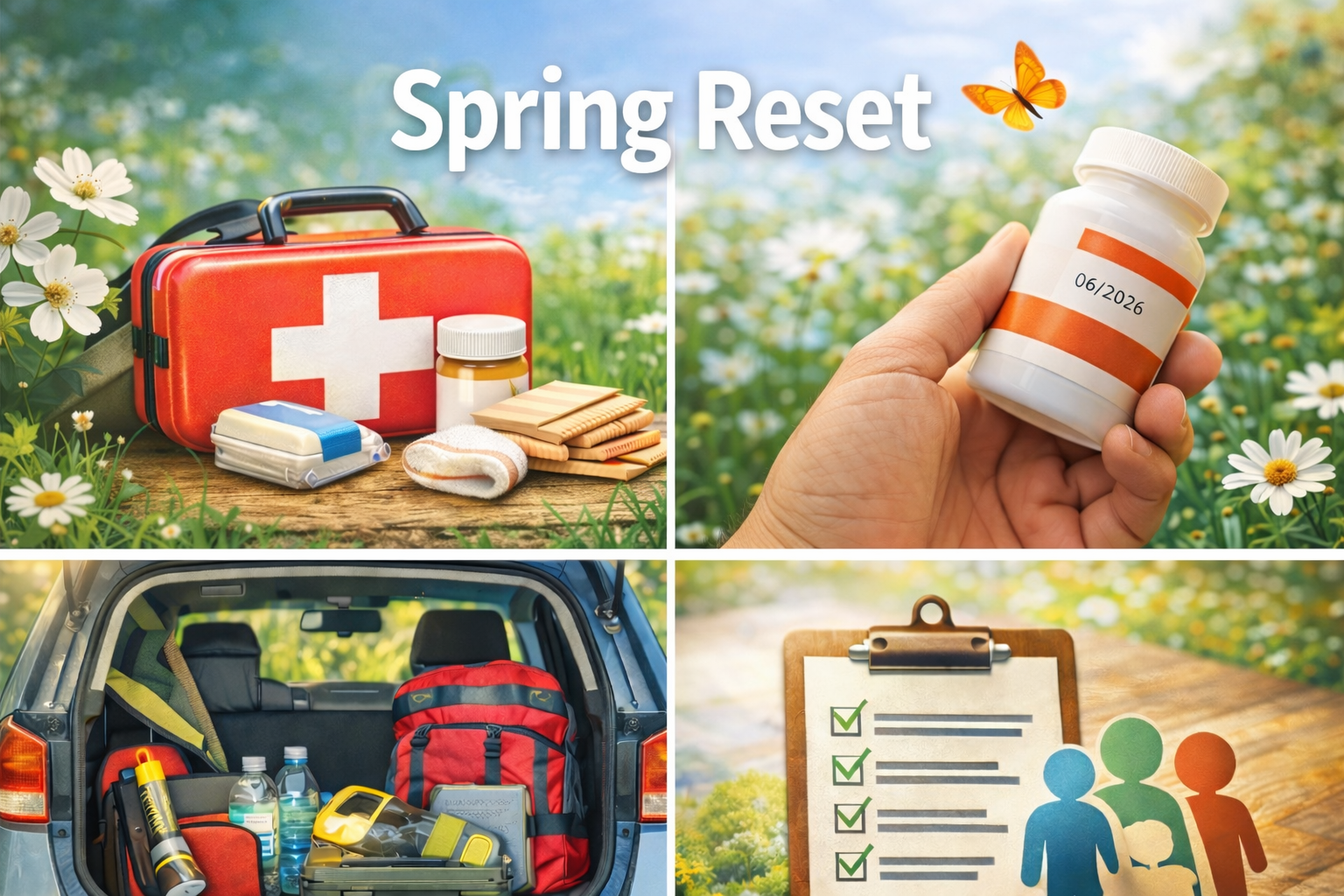
Spring Preparedness Reset: The 30-Minute Check Most Families Skip

Dean Olson
April 09, 2026

We swap out our wardrobes. We deep clean. We finally deal with whatever accumulated over winter.
Spring feels like a reset, and we treat it like one—for everything except the stuff that actually matters when things go wrong.
Preparedness systems don't fail all at once. They degrade quietly. The first aid kit gets raided for bandages and never restocked. The flashlight batteries die sitting in a drawer. The vehicle kit that was perfect in November is now buried under ice scrapers, old receipts, and whatever that smell is.
We spend more energy getting prepared than staying prepared.
And that's where most systems actually break.
The Real Problem
This isn't about building something new.
It's about catching the slow drift between "ready" and "probably fine."
Batteries drain in storage. Medications expire in medicine cabinets. The phone charger you kept in the car got borrowed in February and never returned.
None of this feels urgent. That's exactly why it doesn't get done—until you need something that isn't there anymore.
The Proposition
Every household should complete a simple seasonal reset to keep their preparedness systems current.
Not a new plan. Not more gear. Just 30 minutes that confirms what you already have still works.
Here are four actions to take this spring:
1. Restock What's Been Used
Supplies get used in small ways. Bandages disappear. Snacks get eaten on road trips. Batteries migrate to TV remotes.
If you don't reset periodically, your system quietly degrades without you noticing.
Why This Matters
Partial supplies create false confidence—you think you're ready, but you're not
Small gaps become big problems during actual emergencies
You won't remember what's missing until you need it
Restocking now takes 10 minutes; restocking during a crisis isn't possible
"We have a first aid kit" means nothing if it's empty
What to Check
First aid supplies (bandages, pain relievers, antibiotic ointment)
Flashlights—actually turn them on and verify they work
Phone chargers and backup batteries—test that they hold charge
Emergency food you've eaten from but not replaced
Cash stash if you've dipped into it
The Test
For each item, ask: "If we needed this tonight, would it actually work?"
If the answer is "probably" or "I think so," it needs attention.
2. Check Expiration Dates
Supplies don't announce when they stop working. They just... stop.
That medication you're counting on? Check the date. The granola bars in your emergency kit? Might be stale enough to use as building materials.
Why This Matters
Expired medications may be ineffective or unsafe
Expired food is unpleasant at best, a health risk at worst
Batteries lose charge over time even sitting in a drawer
Rotation prevents waste—you eat what you store, replace what you eat
A 10-minute check now prevents a disappointing discovery later
What to Check
All medications (prescription and over-the-counter)
Emergency food supplies
Stored water (replace if over 6 months old or containers look questionable)
Batteries not currently in use
Sunscreen and insect repellent (yes, these expire too)
Keep It Simple
This is a quick pass, not a full inventory. Walk through, check dates, make a short list. Done.
3. Reset Your Vehicle for the Season
Your car's needs change with the weather. Most of us don't adjust.
The winter gear that made sense in January is now just clutter. And the supplies that matter for spring travel may be buried, depleted, or forgotten entirely.
Why This Matters
Spring and summer mean more driving, more travel, more time away from home
Warm weather brings different risks than cold (heat exhaustion vs. hypothermia)
That blanket taking up space? Less critical now. Water bottles? More critical.
The mental shift from "winter mode" to "travel mode" should include your car
What to Do
Remove winter-specific items (heavy blankets, ice scrapers) or store them properly
Verify core supplies are present: water, snacks, phone charger, flashlight, first aid
Check that spare tire is properly inflated (heat affects pressure)
Refresh water bottles—winter may have frozen and thawed them
Confirm nothing heat-sensitive is stored where sun hits it directly
Your car should reflect how you're actually using it now, not how you used it three months ago.
4. Do a 5-Minute Household Alignment Check
Plans drift as life changes.
Kids get older. Schedules shift. Someone moved the flashlight to a "better spot" and didn't mention it. The meeting location you picked two years ago doesn't make sense anymore because that coffee shop closed.
Why This Matters
Plans only work if everyone knows them
Small life changes can invalidate old decisions without anyone noticing
Misalignment creates confusion during actual emergencies
A 5-minute conversation now prevents a 30-minute argument later when stakes are higher
What to Do
Ask your household: "If something happened tonight, would we know what to do?"
Confirm everyone knows where key items are stored
Verify meeting locations still make sense
Update any contact information that's changed
Check that your emergency contact still knows they're your emergency contact
You're not rebuilding anything. You're confirming what you have still works.
How to Do This in 30 Minutes
You don't need a weekend. You need half an hour and a willingness to actually do it instead of planning to do it.
Minutes 1-10: Supplies check Walk through your emergency supplies. Test flashlights. Note what's missing or depleted. Make a restock list you'll actually use.
Minutes 11-20: Vehicle reset Clear winter clutter. Confirm your kit is present and functional. Do a quick tire and fluid check.
Minutes 21-30: Dates and alignment Scan expiration dates on medications and food. Have a quick conversation with your household about the plan.
That's it.
No overhaul. No guilt about what you haven't done. Just a seasonal reset that keeps your existing preparation functional.
The Real Shift
Most households think about preparedness as something to build.
"We need to get more prepared." "We should really put together a plan." "I've been meaning to buy supplies."
But the bigger gap isn't building. It's maintaining.
The families who stay ready aren't the ones who prepare the most. They're the ones who keep what they've already done current.
Instead of: "We need to get more prepared."
Think: "We need to keep what we already have ready."
Spring's the natural time to make that shift.
Get Your Personalized Priorities
A seasonal reset keeps things current. But it assumes you already know what matters most for your household.
Most families don't. They guess. They follow generic lists. They buy what looks important without knowing if it's their actual next priority.
The PrepareRight assessment identifies your top 10 priorities based on your specific situation—your location, your household composition, your constraints.
It takes 3 minutes and tells you exactly where to focus.
Spring's a natural reset. Use it.
One right step at a time.
Prepare one right step at a time.

Want to Know Your Top 3 Priorities?
Every household is different. Your location, family size, medical needs, and current preparedness level all affect what you should focus on next.
I built a free assessment that asks about your specific situation and gives you your personalized top 3 priorities—not a generic list, but recommendations tailored to your household.
Prepare one right step at a time.